


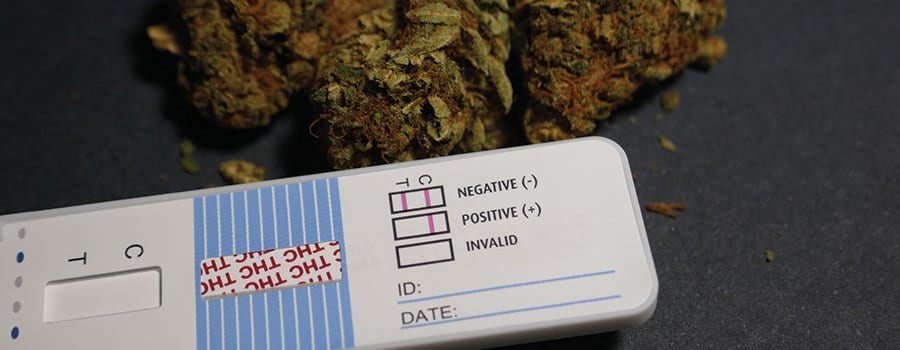
The following article about “The Marijuana Stampede and Your Drug Testing Program” is authored by Current Consulting Group, the number one recognized brand in expert drug testing consulting. This information is provided for educational purposes only. Reader retains full responsibility for the use of the information contained herein.
The Marijuana Stampede and Your Drug Testing Program
When it comes to the legalization of marijuana, we’ve come a long way in a short period of time.
In a season 2 episode of the West Wing, which originally aired on February 21, 2001, Donna, the ever-curious and often misguided secretary to the assistant director of communication asks, “Is there anything to suggest there is a significant number of people who are inclined to smoke pot but don’t because it’s against the law?” Her boss answers “no” to which she follows up with, “Then why do you think if it were decriminalized there would be a sudden stampede of people showing up to work stoned, dragging down the economy, and clearing supermarket aisles of Pringles and Twinkies?”
Donna was an unsuspecting shill for what would become a very successful nationwide movement to legalize marijuana.
At the time the episode aired, only eight states had legalized marijuana for medicinal use, including California, the first state to do so in 1996. About 10 years later, Washington and Colorado became the first states to legalize the so-called “recreational” use of marijuana in 2012. Today, 24 states plus the District of Columbia have legalized recreational marijuana use.
And to answer Donna’s question with the benefit of more than 20 years of hindsight, there has been a stampede to use marijuana generally speaking but also while on the job and it has definitely had a direct and negative impact on the economy in some ways. Fortunately, there seems to be no shortage of Pringles and Twinkies in supermarkets and convenience stores… thank heavens!
Here Are the Facts:
- There has been a dramatic increase in marijuana use that coincides with the ongoing and widespread legalization movement.
- Significant percentages of people admit to using marijuana while on the job.
- Post-accident positivity for marijuana reached a 25-year high in 2022.
Will the Federal Government Legalize Marijuana?
And it could get worse. On May 16, 2024, former President Biden’s Drug Enforcement Administration (DEA) issued a Notice of Proposed Rulemaking that essentially would legalize marijuana by making it a Schedule III controlled substance instead of its normal listing as a Schedule I controlled substance along with heroin and cocaine among other drugs. If enacted, which now appears unlikely to happen anytime soon, would make it legal for doctors to prescribe marijuana for various ailments rather than simply recommend it.
But according to the DEA’s fact sheet, marijuana may not be as benign as some legalization proponents claim:
“The short-term effects of marijuana include: Problems with memory and learning, distorted perception, difficulty in thinking and problem solving, and loss of coordination. The effect of marijuana on perception and coordination are responsible for serious impairments in learning, associative processes, and psychomotor behavior (driving abilities).”
Finally, regarding marijuana’s effects on the body, the DEA states the following: “Marijuana smokers experience serious health problems such as bronchitis, emphysema, and bronchial asthma. Extended use may cause suppression of the immune system. Withdrawal from chronic use of high doses of marijuana causes physical signs including headache, shakiness, sweating, and stomach pains and nausea.”
Wow! “Difficulty in thinking and problem solving.” “Distorted perception.” It sounds like marijuana use and the workplace don’t mix.
Are Drug Users Expensive to Employ?
It’s not surprising, given the negative effects of using marijuana, that employees who use the drug are expensive to employ.
There are many ways to add up what it costs to employ drug users, but here’s the bottom line: The average cost of each substance abusing employee is $8,817 per year from lost productivity and increased accidents and workers’ compensation claims according to the findings from NORC at the University of Chicago and the National Safety Council (NSC).
From a cost perspective, a drug-abusing employee who is, for example, 5 times more likely to cause a workplace accident would cost his or her employer much more than $8,800 per year as cited above. Just focusing on workers’ compensation costs alone, the average cost per claim in 2021-2022 was $44,179.
If your company employs drivers, you’ll want to know that the same report found “the most costly lost-time workers’ compensation claims by cause of injury result from motor-vehicle crashes, averaging $90,914 per workers’ compensation claim that occurred in 2021 and 2022.
How Can Employers Combat Marijuana at Work?
So, what can employers do to combat the problem? First, don’t give up. While it’s true that many states have legalized marijuana, no state prevents employers from holding workers accountable for being at work under the influence of marijuana.
Next, keep your drug testing policy up to date and in compliance with applicable state marijuana laws. Ensure your policy states specifically that employees may not:
- Bring marijuana to the workplace,
- Use marijuana while at work, or
- Be impaired or under the influence of marijuana while on the job, regardless of when they used the drug.
Finally, include marijuana testing in your drug testing program. To remove it from your drug-test panel is an invitation for employees to use marijuana freely, which potentially increases a company’s exposure to legal liability if an employee high on marijuana causes an accident that results in harm to another person.
Also, beware that many state workers’ compensation regulations allow employers to move to deny benefits based on a positive drug test result. In Florida, for example, the regulation states: “Compensation is not payable if the injury was occasioned primarily by the intoxication of the employee, by the influence of any drugs, barbiturates, or other stimulants not prescribed by a physician.”
Of course, if a company does not conduct post-accident drug testing, specifically, they would lack the evidence necessary to move to deny a workers’ compensation claim filed by someone who had drugs in their system at the time of an accident. In safety-sensitive work environments, this could add up to a significant amount of savings lost by not conducting post-accident tests for marijuana.
Conclusion
ClearStar offers solutions designed to help you achieve your drug-free workplace objectives, including lab-based urine, oral fluid, and hair testing methods, which are all accurate at detecting marijuana. Check with your ClearStar representative for answers to your questions about how you can get the most out of your drug testing program in this age of legal marijuana.

Copyright © 2010-2025 ClearStar – No portion of this article may be reproduced, retransmitted, posted on a website, or used in any manner without the written consent of ClearStar. When permission is granted to reproduce this article in any way, full attribution to the author and copyright holder is required.
© 2025 ClearStar. All rights reserved. – Making copies of or using any part of the ClearStar website for any purpose is prohibited unless written authorization is first obtained from ClearStar. ClearStar does not provide or offer legal services or legal advice of any kind or nature. Any information on this website is for educational purposes only.