


By Bill Current, President and Founder of Current Consulting Group (CCG)
This information is provided for educational purposes only. Reader retains full responsibility for the use of the information contained herein.
During a recent webinar, someone asked what would happen if the federal government legalized marijuana. Would that make testing for marijuana illegal throughout the country?
That’s a great question and the short answer is simple—No, testing for marijuana will still be legal regardless of what the federal government does and doesn’t do about the legality of pot. How do I know that? There are many reasons, but here are three key points:
- The U.S. Department of Transportation (DOT) will continue to require employers to screen job applicants and employees in transportation-related safety-sensitive positions for marijuana. That will not change.
- In the same way that employers are still permitted to test for alcohol, which is legal in all 50 states, they will continue to be permitted to test for marijuana, at least under most circumstances.
- The federal government is not likely to create a law that prohibits employers from making reasonable efforts to secure the safety of their workplaces. There are decades of irrefutable evidence showing that workers impaired by marijuana are less safe and less productive compared to their non-substance-abusing co-workers. Drug testing has proven to be the most effective method of deterring people from being at work while under the influence of marijuana.
According to the Quest Diagnostics Drug Testing Index, overall positive drug test results dropped from 13.6% in 1988 to an all-time low of 3.5% between 2010 and 2012, a testament to the effectiveness of drug testing. However, positive results have gradually increased over the past decade, reaching 4.2% in 2022.[i] Is it a coincidence that the recent increase in positive drug testing results coincides with the ramped-up legalization of marijuana across the country? Probably not.
The 2023 Quest report found that marijuana positivity increased 11.8% between 2021 and 2022 in states in which recreational marijuana is legal and 8.3% during the same period in states in which medical marijuana is legal.[ii]
State Marijuana Laws and Drug Testing
Consider the following: Washington State passed a law in 2023 that prohibits employers from discriminating against job applicants who are lawful users of marijuana and produce a positive test result from a testing method that solely reveals the presence of the so-called “non-psychoactive metabolite of cannabis.” This means urine drug testing of job applicants for marijuana is no longer permitted because urine tests detect the presence of cannabis metabolites rather than the drug itself, which is often referred to as the “parent” drug.
However, Washington lawmakers excluded employee testing from this restriction, which means that employers there can still conduct reasonable suspicion, post-accident, and random testing of employees with any drug testing method, and they can still test applicants for marijuana with any “scientifically valid drug screening conducted through methods that do not screen for nonpsychoactive cannabis metabolites.”[iii] (Note: Oral fluid testing typically reveals the presence of parent THC rather than cannabis metabolites and certainly qualifies as a “scientifically valid drug screening” method according to the federal government.[iv])
Furthermore, Washington’s new law also includes an extensive list of occupations that are exempt from the restrictions on pre-employment testing for marijuana with urine, including safety-sensitive positions for which “impairment while working presents a substantial risk of death.” Such positions must be identified by the employer prior to an individual’s application for employment.
In other words, even lawmakers who vote to legalize marijuana still know enough not to prevent employers from identifying marijuana users from getting hired to perform safety-sensitive jobs like piloting an airplane, operating a forklift, or performing brain surgery. And this type of policy language is seen in many state marijuana laws.
Impairment
It is important to remember that while a drug test does not prove either scientifically or legally that a person is impaired, the presence of a metabolite of cannabis in a person’s system as detected by a drug test does not mean the person is not impaired. The use of the term “non-psychoactive metabolite” as found in the new laws in both Washington and California is misleading. Impairment from marijuana use can last well beyond the immediate period of time following the initial use.
A 2021 report from the University of Sydney claims to have accurately identified a window of impairment for cannabis users, “suggesting more accurate timeframes of intoxication from one of the drug’s active compounds, tetrahydrocannabinol (THC).” The research, published in Neuroscience & Biobehavioral Reviews, analyzed 80 separate studies to “determine when people would be impaired after cannabis use. Depending on how much THC is taken, how it’s taken, and the person taking it, they found cognitive impairment could last between three and 10 hours.”[v]
In other words, someone could still be under the influence of marijuana and thus a danger to the workplace for many hours after they last smoked a joint or consumed a marijuana-laced brownie, and most importantly, long after the individual no longer feels high.
The National Highway Traffic Safety Administration (NHTSA) reported that “levels of THC do not closely correlate to the degree of impairment – and that often peak impairment occurs when THC levels have already begun to decline.”[vi] (Also see a report from the AAA Foundation for Traffic Safety.[vii])
Another study measured the “magnitude of acute and residual effects of cannabis on cognition in adolescents and adults” and concluded:
“Verbal learning and memory displayed the most robust evidence and were most impaired by acute cannabis intoxication that persisted after intoxication passed.”[viii]
This suggests that an employee under the influence of marijuana but no longer feeling high may have trouble processing verbal instructions and then remembering those instructions accurately in order to fulfill them. For example, a forklift operator could be instructed to use the forklift to unload a pallet full of heavy boxes from a truck and then place the pallet on an upper shelf in a warehouse. If that individual is under the influence of marijuana smoked earlier in the day, maybe even before his or her work shift started, he might have trouble processing the instructions and end up delivering the pallet to the wrong location or even have trouble safely operating the forklift, resulting in an accident that causes significant property damage, the destruction of the cargo, or harm to innocent co-workers or customers.
Proponents of marijuana and even some drug testing providers and lawmakers at the state and federal levels might argue that the employer has no right to know if that individual uses marijuana, when he last used it or if he has marijuana in his system and could still be under the influence. After all, following the accident, the employer can conduct a post-accident drug test, but that doesn’t prevent the accident from happening. A pre-employment test that includes marijuana or the possibility of being randomly selected for a drug test that includes marijuana does more to deter use and avoid costly and sometimes very harmful workplace accidents.
For the federal government to legalize marijuana and, in the process, prohibit employers from conducting drug tests that include marijuana would be like authorizing an airline pilot to take off while prohibiting her from using the plane’s sophisticated computerized navigation system to avoid colliding with another aircraft. Or similarly, sending Tom Brady on the field to score the winning touchdown but removing his offensive line, leaving him completely exposed to the onrushing defensive line.
Will the federal government, the U.S. Congress, or the President of the United States, by executive order, attempt to legalize, decriminalize, or reclassify marijuana from a Schedule I drug to a Schedule III drug? It’s possible. Perhaps the only thing that speaks to politicians more than money are opinion polls. According to a 2022 survey, 59% of U.S. adults favor legalizing marijuana for both medical and so-called recreational use and another 30% favor legalizing it for medical use only.[ix] That’s a total of 89% who favor legalizing marijuana one way or another.
But what about drug testing? According to a 2016 survey, 59% of Americans believe employers should have the right to conduct drug testing on any employee, while 27% believe drug testing should be limited to certain workers who perform safety-sensitive jobs.[x] A 2018 survey found that 61% of adults favored pre-employment testing, while 26% were against it.[xi] Of course, a lot has transpired since these surveys were conducted, including the pandemic, record-setting inflation, a recession (according to some experts), a crippling labor shortage, and more states legalizing marijuana. But most employers continue to conduct drug testing. Why?
In a 2023 survey conducted by the Current Consulting Group,[xii] 68% of employers indicated that they consider drug testing to be “very effective,” while nearly 25% said it is effective but to a lesser degree. Only 3% said they did not consider it effective and wished their company didn’t conduct drug testing.
When asked what benefits they realized from drug testing, 86% said it improved workplace safety, 59% indicated it helped improve the company’s reputation, and 56% said it helped hire “better quality employees.” Another 42% said it helped improve productivity.
The survey also found that 77% of employers have no plans to discontinue testing for marijuana, while only 9% said they have already dropped it.
Conclusion
Workplace drug testing is here to stay. Testing applicants and employees for marijuana, especially those applying for or already working in safety-sensitive positions, is permitted in virtually every state (with New York being the only exception). Employers still have the right to prohibit workers from using marijuana while on the job, bringing marijuana into the workplace, and being at work impaired by marijuana.
It is highly unlikely that the federal government, even if it lifted restrictions on marijuana, would do anything to change employers’ rights to protect their workers, customers, and the livelihood of their businesses from the dangerous and costly effects of marijuana use by employees. Drug testing works, even in the age of legal marijuana!
End Notes
[i] Quest Diagnostics Drug Testing Index. Table 1. https://www.questdiagnostics.com/content/dam/corporate/restricted/documents/employer-solutions/2023-drug-testing-index-and-industry-insights/Drug-Testing-Index-2023-Data-Tables-20230511.pdf
[ii] Post-Accident Workforce Drug Positivity for Marijuana Reached 25-Year High in 2022, Quest Diagnostics Drug Testing Index Analysis Finds. Quest Diagnostics. May 2023. https://newsroom.questdiagnostics.com/2023-05-18-Post-Accident-Workforce-Drug-Positivity-for-Marijuana-Reached-25-Year-High-in-2022,-Quest-Diagnostics-Drug-Testing-Index-Analysis-Finds
[iii] FINAL BILL REPORT ESSB 5123. Signed by the governor on May 9, 2023. https://lawfilesext.leg.wa.gov/biennium/2023-24/Pdf/Bill%20Reports/Senate/5123-S.E%20SBR%20FBR%2023.pdf
[iv] Mandatory Guidelines for Federal Workplace Drug Testing Programs—Oral/Fluid. Federal Register. October 2019. P. 57554. https://www.samhsa.gov/sites/default/files/programs_campaigns/division_workplace_programs/final-mg-oral-fluid.pdf
[v] How long does impairment last after cannabis use? Cosmos. Ellen Phiddian. April 2021. https://cosmosmagazine.com/health/body-and-mind/how-long-does-impairment-last-after-cannabis-use/
[vi] Background on: Marijuana and impaired driving. https://www.iii.org/article/background-on-marijuana-and-impaired-driving
[vii] Overview of Major Issues Regarding the Impacts of Alcohol and Marijuana on Driving. AAA Foundation for Traffic Safety. March 2016. https://aaafoundation.org/overview-major-issues-regarding-impacts-alcohol-marijuana-driving/
[viii] Evidence on the acute and residual neurocognitive effects of cannabis use in adolescents and adults: a systematic meta-review of meta-analyses. Laura Dellazizzo, Stéphane Potvin, Sabrina Giguère, Alexandre Dumais. Addiction. Volume 117, Issue 7. January 2022. https://onlinelibrary.wiley.com/doi/abs/10.1111/add.15764
[ix] Americans overwhelmingly say marijuana should be legal for medical or recreational use. Pew Research Center. Ted Van Green. November 2022. https://www.pewresearch.org/short-reads/2022/11/22/americans-overwhelmingly-say-marijuana-should-be-legal-for-medical-or-recreational-use/
[x] Majority support for widespread workplace drug testing. YouGov. Peter Moore. May 2016. https://today.yougov.com/politics/articles/15470-majority-support-widespread-drug-testing?redirect_from=%2Fnews%2F2016%2F05%2F25%2Fmajority-support-widespread-drug-testing%2F
[xi] 61% Say Drug Testing for Jobs Is Needed. Rasmussen Reports. March 2018. https://www.rasmussenreports.com/public_content/lifestyle/general_lifestyle/march_2018/61_say_drug_testing_for_jobs_is_needed
[xii] Current Consulting Group’s 2023 Employer Drug Testing Survey. October 2023.
© 2010-2024 The Current Consulting Group, LLC – No portion of this article may be reproduced, retransmitted, posted on a website, or used in any manner without the written consent of the Current Consulting Group, LLC. When permission is granted to reproduce this article in any way, full attribution to the author and copyright holder is required.
Let's start a conversation
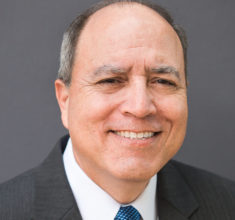
Bill Current - President and Founder of Current Consulting Group (CCG)
Bill Current founded the Current Consulting Group in 1998 and it has become the number one recognized brand name in compliance, business development, and operations consulting in the drug testing industry. He created Current Compliance, the only comprehensive online subscription database on all state laws related to workplace drug testing, including marijuana and workers’ compensation laws. He is the author of “Why Drug Testing: Updated and Expanded for 2020” as well as nine other books on substance-related issues.
At ClearStar, we are committed to your success. An important part of your employment screening program involves compliance with various laws and regulations, which is why we are providing information regarding screening requirements in certain countries, region, etc. While we are happy to provide you with this information, it is your responsibility to comply with applicable laws and to understand how such information pertains to your employment screening program. The foregoing information is not offered as legal advice but is instead offered for informational purposes. ClearStar is not a law firm and does not offer legal advice and this communication does not form an attorney client relationship. The foregoing information is therefore not intended as a substitute for the legal advice of a lawyer knowledgeable of the user’s individual circumstances or to provide legal advice. ClearStar makes no assurances regarding the accuracy, completeness, or utility of the information contained in this publication. Legislative, regulatory and case law developments regularly impact on general research and this area is evolving rapidly. ClearStar expressly disclaim any warranties or responsibility or damages associated with or arising out of the information provided herein.